
Contact Us
+2349014882100
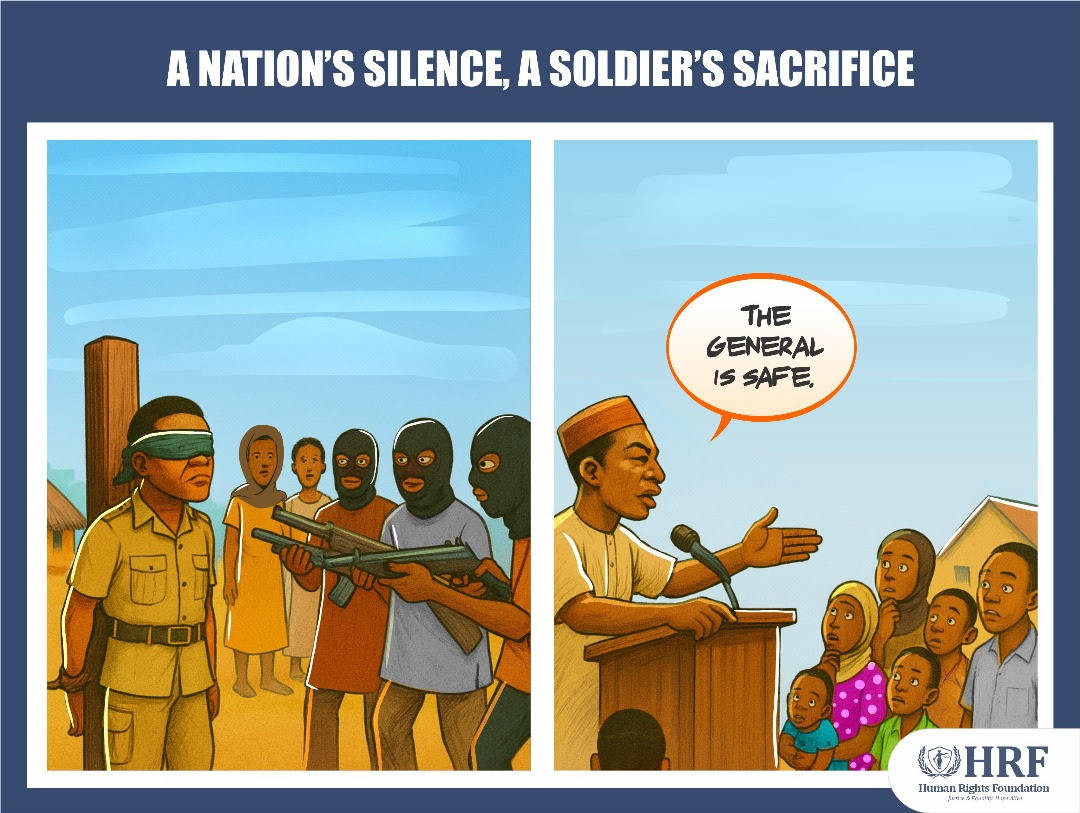
The reported killing of Brigadier General M. Uba in Damboa, Borno State, has left a deep and painful mark on our collective conscience. According to the notorious terrorist group, the Islamic State West African Province (ISWAP), the senior officer was captured during an ambush and later executed, a claim circulated through its Amaq propaganda outlet. The Nigerian Army initially denied his capture, insisting that he had returned safely with his troops, even as ISWAP doubled down on its claims of responsibility, according to AP. Days later, the tragic reality became undeniable.
What cuts deeper than the brutality itself is the unsettling silence that followed. For hours, the nation heard nothing official. A man who spent his life defending Nigeria’s territorial integrity was gone, yet the authorities' public communications were hesitant, delayed, and contradictory. The general’s last communications showed a man stranded, battery draining, unsure of rescue, but still resolute in duty: “Are they going to pick me…? My battery is 31%,” reported media sources. These were not the words of an anonymous casualty; they were the final threads of a husband, father, uncle, son, a human being facing the unimaginable.
In moments like this, we must confront not just the cruelty of terrorism but the legal and moral obligations that bind our nation. Section 33 of the 1999 Constitution guarantees the right to life, a right echoed globally in Article 6 of the International Covenant on Civil and Political Rights and Article 4 of the African Charter on Human and Peoples’ Rights, both of which Nigeria is bound to respect. If the claims of capture and execution are true, the act is a grave violation of both human rights and international humanitarian law. Common Article 3 of the Geneva Conventions requires humane treatment of anyone who is detained, including combatants out of battle. Execution of a captured soldier is prohibited under every known principle of war and humanity.
But beyond ISWAP’s crime lies the question of institutional duty. A democracy cannot afford opacity when its own defenders fall. Public trust erodes when truth is delayed. Silence, in such moments, is not neutrality; it is abandonment. Transparency is not optional; it is a constitutional obligation under the state’s duty to protect life and ensure accountability.
General Uba’s death forces us to rethink the fragile relationship between the state, citizen, and soldier. It demands honest investigation, not defensive press releases. It demands clearer operational protocols, better intelligence coordination, and an unwavering commitment to truth. Most importantly, it requires that we treat every life lost in service not as a footnote but as a national tragedy deserving dignity, respect, and public accountability.
Martin Luther King Jr. once warned that “silence is betrayal.” Nigeria must not betray those who stand between us and chaos. To honor Brigadier General M. Uba is not only to mourn him but to insist on truth, justice, and reforms that ensure no soldier’s death ever disappears into the fog of silence again.
He died defending Nigeria. The least Nigeria can do is defend the truth about his death.
.jpg)
0 Comments