
Contact Us
+2349014882100
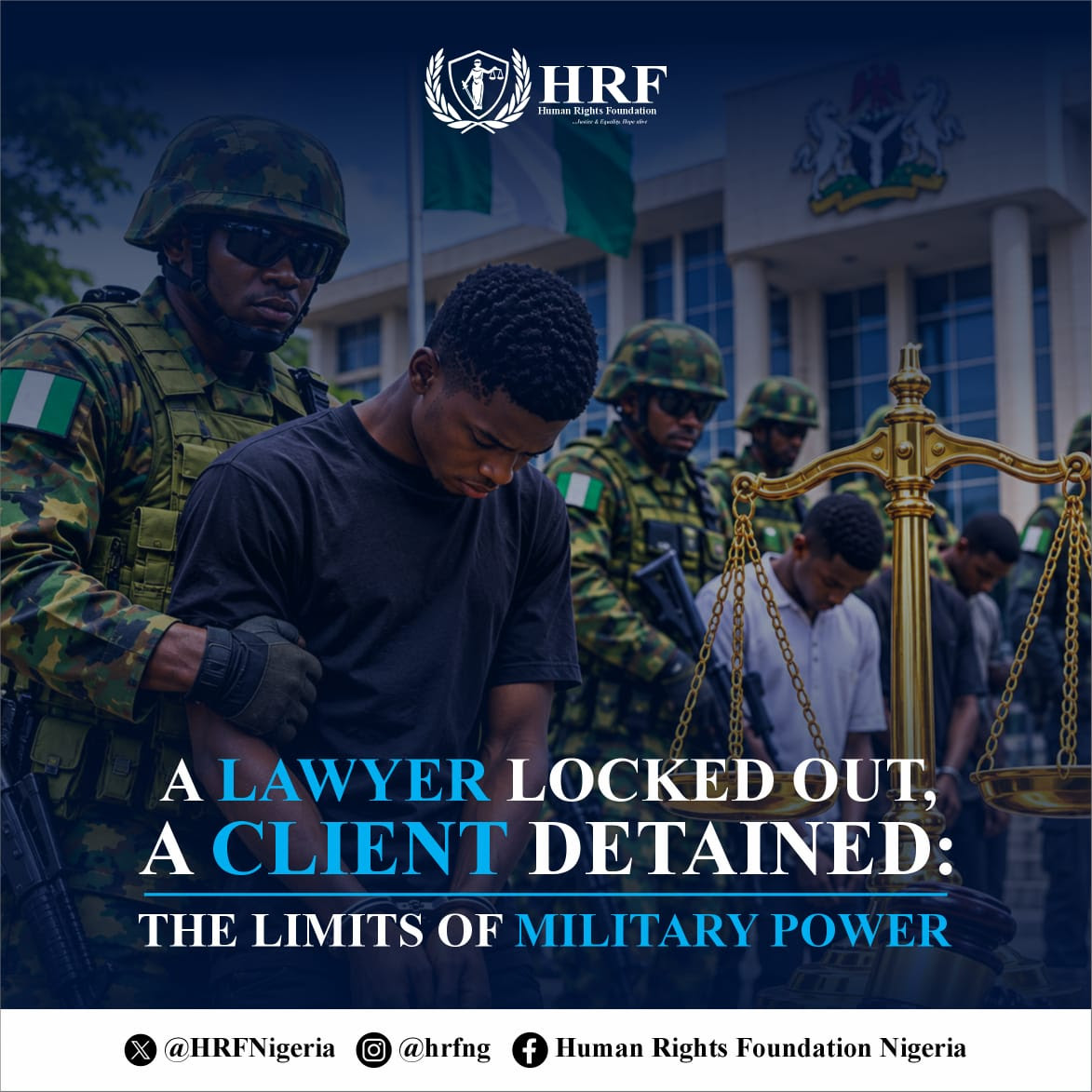
Imagine going to visit a relative receiving medical treatment, only to find yourself in detention. Imagine your family wondering where you are, your lawyer trying to reach you, and no clear answers about why you are being held. For Lawrence Zongo, a Plateau State-based journalist and human-rights defender, this is the troubling situation described in reports of his alleged arrest by personnel of the Nigerian Army in Jos.
According to reports published by Premium Times in October 2026, Zongo was allegedly arrested on 5 October at Maxwell Khobe Cantonment, Jos, where he had gone to visit relatives receiving medical treatment following an attack in Bassa Local Government Area. Amnesty International Nigeria subsequently raised concerns that he was being held without access to his lawyer and family. These allegations demand attention, but a credible investigation must establish the circumstances of the arrest and detention.
The question is simple, but its implications are profound: when the military takes a civilian into custody, does the law stop at the gates of the barracks?
The answer is no.
Section 35(1) of the Constitution of the Federal Republic of Nigeria 1999 (as amended) guarantees the right to personal liberty. Although the law permits arrest and detention in specified circumstances, those powers are not unlimited. A person cannot lawfully be deprived of liberty merely because an authority has the power to command, investigate or enforce discipline. The deprivation of liberty must have a lawful basis, and the applicable constitutional safeguards must be respected.
Section 35(2) further protects an arrested or detained person's right to remain silent or avoid answering questions until after consultation with a legal practitioner or another person of their choice. This protection is particularly important where a detainee is allegedly denied access to a lawyer. Without meaningful access to legal advice, a person may struggle to understand the grounds of detention, challenge its legality or protect other fundamental rights.
The concern becomes even more serious when the detaining authority is the military and the person detained is a civilian. The Nigerian Armed Forces have important responsibilities in protecting national security, but national security is not a blank check. Where a civilian is suspected of an ordinary criminal offense, the military's actions must have a lawful basis and comply with the constitutional framework governing arrest and detention. Military authority does not automatically displace the role of civilian law-enforcement agencies or the courts' jurisdiction.
A wider question also concerns freedom of expression. Section 39(1) of the Constitution guarantees freedom of expression. If evidence established that Zongo was detained because of his journalism, human-rights documentation, or criticism of public authorities, the matter would extend beyond personal liberty to the protection of public-interest reporting. Journalists and human-rights defenders are not above the law; equally, their professional activities must not expose them to arbitrary detention or unlawful reprisals.
However, it is important not to confuse an allegation with a judicial finding. The available reports do not establish conclusively why Zongo was arrested or whether a court has determined the legality of his detention. The Nigerian Army should therefore clarify the circumstances of the arrest, identify the legal basis for any continued detention, and ensure that the detainee's applicable rights are respected.
Where detention is unlawful, Section 46 of the Constitution provides a route through which an affected person may seek redress for the infringement of fundamental rights. The Fundamental Rights (Enforcement Procedure) Rules 2009 also provide the procedural framework for seeking judicial enforcement. The courts must remain accessible to persons who contend that their liberty has been unlawfully restricted.
Ultimately, the issue is bigger than Lawrence Zongo. It concerns the protection every Nigerian should enjoy when confronted by the coercive power of the State. Today, the question concerns a journalist reportedly held in a military facility. Tomorrow, it could concern another civilian whose family cannot obtain answers and whose lawyer cannot secure access.
The true test of the rule of law is not whether the State can exercise power, but whether it can justify that power within the law. A uniform does not place its wearer above the Constitution, and a military facility does not create a zone beyond judicial scrutiny.
When a person's liberty is taken away, the law must not be left outside the gate.

0 Comments